Market statistics
- Total volume
- $1.6M
- 24h volume
- $234K
- Liquidity
- $69K
- Open interest
- $26K
- Comments
- 11
Platform comparison
| Platform | YES odds | NO odds | Fee | KYC | Settlement | |
|---|---|---|---|---|---|---|
Polymarket (via PolyGram) Pick polygram.ink (preferred broker) |
5% | 95% | 0% (USDC on-chain) | No-KYC up to $1,500 | USDC, auto via UMA oracle | Trade this market → |
Polymarket (direct) polymarket.com |
5% | 95% | 0% | Geo-blocked in US/UK/EU | USDC, on-chain | Trade this market → |
Kalshi kalshi.com |
— | — | Up to 7% per trade | US-only, KYC required | USD | Trade this market → |
Betfair Exchange betfair.com |
— | — | 2-5% commission | Full KYC from first trade | GBP / EUR | Trade this market → |
Manifold Markets manifold.markets |
— | — | Play-money (mana) | None — play-money | Mana (no cash-out) | Trade this market → |
Outcome snapshot
Current YES/NO probability from the live order book.
Market context
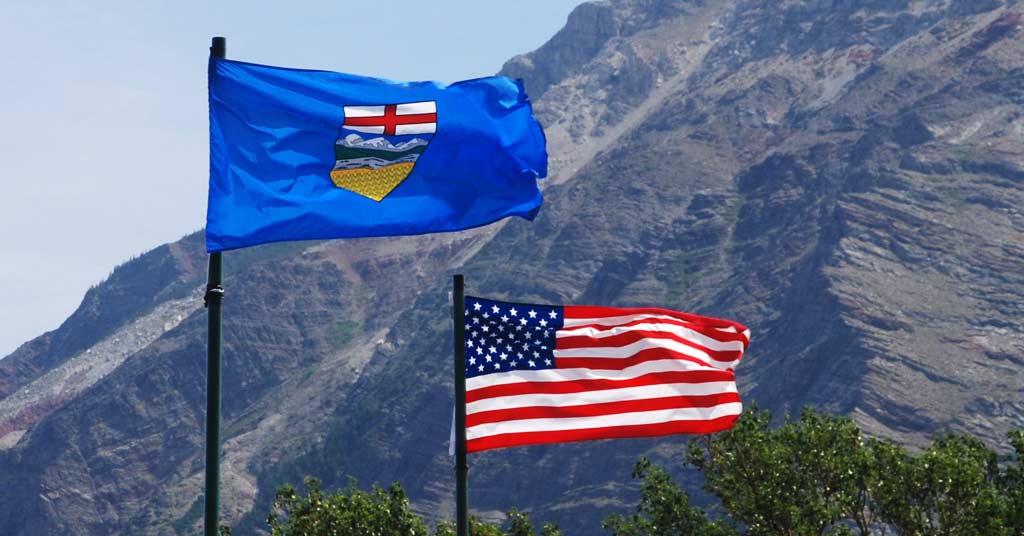
Alberta, Canada's fourth-most populous province with approximately 4.7 million residents, currently operates as a constituent part of the Canadian federation. For the province to come under US sovereignty by end-2026 would require formal agreement between the governments of Canada and the United States, followed by constitutional and legislative processes in both nations. The timeframe represents roughly 11 months from the February 2026 reference date, compressing what would historically be multi-year negotiations into an exceptionally compressed period.
Historical precedent for territorial transfers between established democracies remains extraordinarily rare in the modern era. The most comparable recent case—Denmark's 2019 consideration of selling Greenland to the US—resulted in no formal negotiations despite public discussion by the Trump administration. Alaska and Hawaii's admission to the US in 1959 involved territories with substantially smaller populations and different governance structures. No Canadian province has seriously pursued secession to join the US, and Canadian constitutional law provides no mechanism for provincial departure from the federation without federal consent, which remains politically implausible under current circumstances.
Catalysts requiring materialisation include: explicit public statements from Alberta's provincial government and the US federal government indicating serious negotiation intent; formal announcements of bilateral talks; and passage of enabling legislation in both jurisdictions. The 5% implied probability reflects the extreme unlikelihood of these sequential events occurring within the settlement window, though traders should monitor any statements from Alberta's United Conservative Party government or shifts in US policy rhetoric regarding continental integration.
Wikipedia Context
-
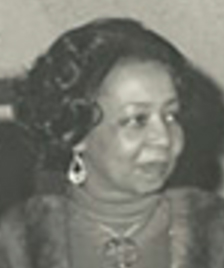 Alberta Jones Seaton
Alberta Jones Seaton was one of the first African-American women awarded a doctorate in zoology, in Belgium in 1949. She then moved to East Africa, where she and her husband became involved in African independence movements and she developed an academic career. Her husband, Earle Seaton, was an international lawyer and then jurist in several countries. Alber
-
 Alberta Odell Jones
Alberta Odell Jones was an African-American attorney and civil rights icon. She was one of the first African-American women to pass the Kentucky bar and the first woman appointed city attorney in Jefferson County. She was murdered by an unknown person.
Methodology
This overview of Will Alberta join the US? reviews the four comparable platforms from a regulatory perspective: which is accessible in your jurisdiction, where KYC kicks in, how the platform is classified by your country of residence. Live probability is the Polymarket mid; comparison columns show regulatory status, KYC thresholds and settlement options for each platform.
Resolution & payout
On Polymarket, resolution runs on-chain via UMA Optimistic Oracle. USDC payout is instant and automatic, with no KYC. Tax treatment depends on your jurisdiction — in the US, gains are usually ordinary income; in the UK, often capital gains. Consult a tax professional for your situation.
FAQ
- Do I need to KYC for PolyGram?
- Not for lifetime trading volume under $1,500. Above that threshold, a quick KYC flow kicks in — ID, selfie, approximately 5-10 minutes. The threshold matches FATF travel standards for unregulated crypto platforms.
- Can I trade anonymously?
- Pseudonymously, yes — up to the KYC threshold. PolyGram stores an email address and wallet addresses rather than a legal name. Over $1,500 lifetime volume triggers KYC, after which identity is no longer anonymous.
- Are prediction markets gambling?
- Legally unclear in most jurisdictions. Some interpretations classify them as wagering (gambling regulation applies), others as derivatives (financial regulation applies). There's no global precedent specifically for on-chain prediction markets.
- Is there a withdrawal cap?
- No platform-side cap. You can withdraw any amount provided KYC is complete. SEPA bank withdrawals over €15,000 trigger additional anti-money-laundering checks (statutory obligation for all platforms).
- What if regulation changes?
- If regulation changes in your jurisdiction (e.g. prediction markets are banned), PolyGram would geo-block the affected region and continue processing withdrawals. Your funds remain withdrawable at any time.
Trade Will Alberta join the US? on PolyGram
Live order book, 0% fees, USDC settlement in seconds.
Open live market →