Market statistics
- Total volume
- $37.8M
- 24h volume
- $545K
- Liquidity
- $187K
- Open interest
- $4.2M
- Comments
- 3
Platform comparison
| Platform | YES odds | NO odds | Fee | KYC | Settlement | |
|---|---|---|---|---|---|---|
Polymarket (via PolyGram) Pick polygram.ink (preferred broker) |
0% | 100% | 0% (USDC on-chain) | No-KYC up to $1,500 | USDC, auto via UMA oracle | Trade this market → |
Polymarket (direct) polymarket.com |
0% | 100% | 0% | Geo-blocked in US/UK/EU | USDC, on-chain | Trade this market → |
Kalshi kalshi.com |
— | — | Up to 7% per trade | US-only, KYC required | USD | Trade this market → |
Betfair Exchange betfair.com |
— | — | 2-5% commission | Full KYC from first trade | GBP / EUR | Trade this market → |
Manifold Markets manifold.markets |
— | — | Play-money (mana) | None — play-money | Mana (no cash-out) | Trade this market → |
Outcome snapshot
Current YES/NO probability from the live order book.
Market context
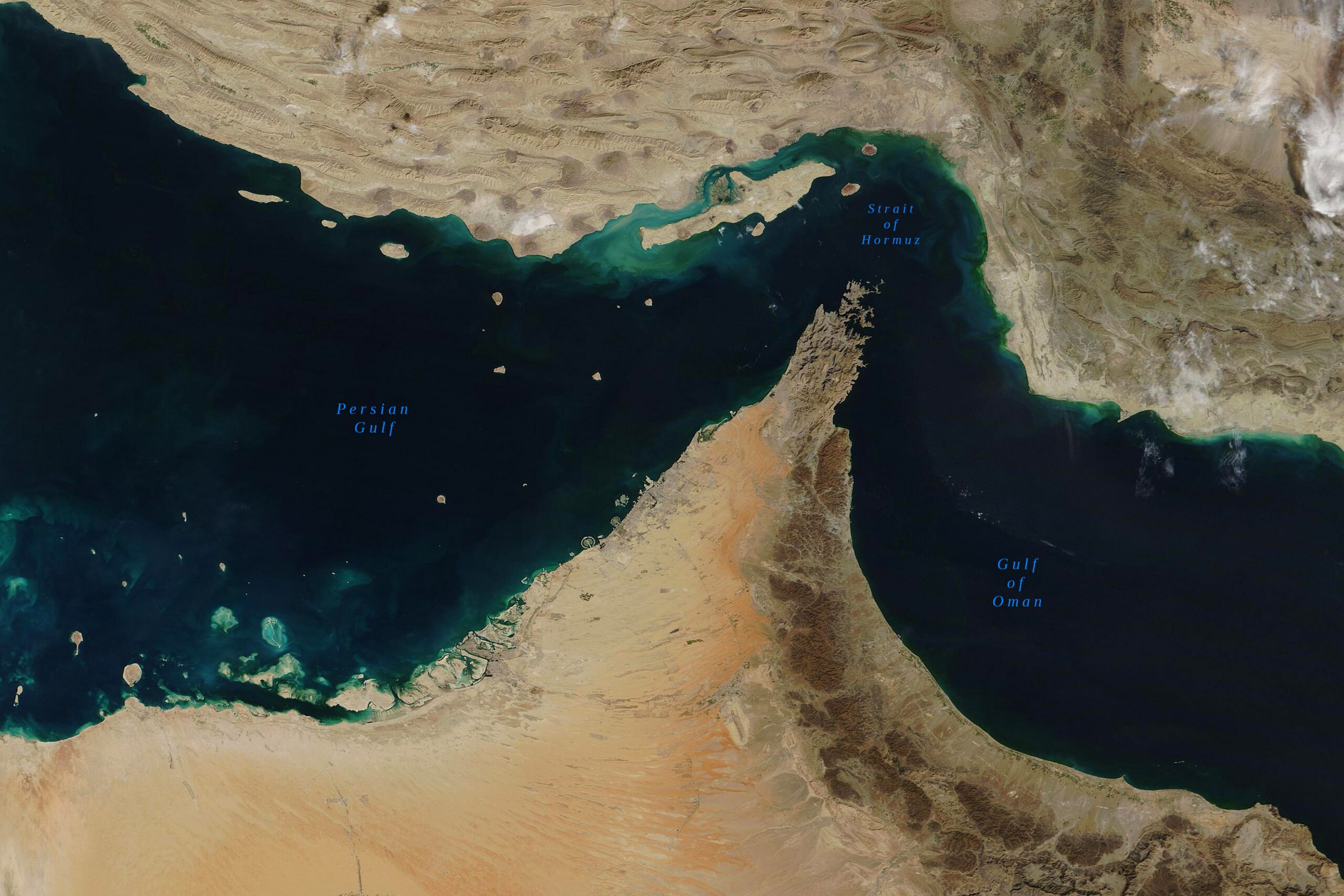
The Strait of Hormuz, through which roughly one-fifth of global seaborne oil passes, has experienced significant disruption since late 2023 due to Houthi attacks on commercial shipping and subsequent regional tensions. Transit call volumes—measured by IMF Portwatch as daily arrivals of container, bulk, tanker, and general cargo vessels—dropped substantially from historical norms of 60+ daily transits. Recovery to pre-disruption levels depends on sustained de-escalation of regional hostilities, restoration of shipping confidence, and normalisation of insurance premiums and routing decisions that currently incentivise longer alternative passages around Africa.
Historical precedent suggests that shipping corridors disrupted by geopolitical events typically require 12–18 months for full recovery once active hostilities cease, though partial recovery can occur within months if security conditions stabilise. The 2022 Russia–Ukraine conflict's impact on Black Sea shipping and the 2011 Suez Canal closure both demonstrated that traders watch for three sequential signals: official security clearances from maritime authorities, insurance premium compression, and resumption of regular shipping schedules by major carriers. The current 0% probability reflects widespread market scepticism that these conditions will align by April 2026.
Key catalysts include announcements from the US Navy regarding escort operations, statements from the International Maritime Organization on corridor safety assessments, and shipping line guidance on routing decisions. Traders should monitor weekly IMF Portwatch data releases for the 7-day moving average metric itself, alongside regional security developments and statements from major oil exporters like Saudi Arabia and the UAE regarding confidence in transit safety. Recent reporting from Lloyd's List and Splash247 indicates shipping lines remain cautious despite periods of reduced attack frequency.
Wikipedia Context
-
 Strait of Hormuz
The Strait of Hormuz is a waterway between the Persian Gulf and the Gulf of Oman. On the north coast lies Iran, and on the south coast lies the Musandam Peninsula under the Musandam Governorate of Oman, with a portion of the southwest of the peninsula under the United Arab Emirates. The strait is about 104 miles long, with a width varying from about 60 mi to
-
 Battle of the Strait of Hormuz (1553)
The Battle of the Strait of Hormuz was fought in August 1553 between an Ottoman fleet, commanded by Admiral Murat Reis, against a Portuguese fleet of Dom Diogo de Noronha. The Turks were forced to retreat after clashing with the Portuguese.
-
 2026 Strait of Hormuz crisis
Shipping traffic through the Strait of Hormuz, a major maritime choke point for world energy trade, has been largely blocked by Iran since 28 February 2026, when the United States and Israel launched an air war against Iran and assassinated its supreme leader Ali Khamenei. In retaliation, Iran launched missile and drone attacks on Israel, US military bases,
Methodology
This overview of Strait of Hormuz traffic returns to normal by end of April? reviews the four comparable platforms from a regulatory perspective: which is accessible in your jurisdiction, where KYC kicks in, how the platform is classified by your country of residence. Live probability is the Polymarket mid; comparison columns show regulatory status, KYC thresholds and settlement options for each platform.
Resolution & payout
On Polymarket, resolution runs on-chain via UMA Optimistic Oracle. USDC payout is instant and automatic, with no KYC. Tax treatment depends on your jurisdiction — in the US, gains are usually ordinary income; in the UK, often capital gains. Consult a tax professional for your situation.
FAQ
- Can I trade anonymously?
- Pseudonymously, yes — up to the KYC threshold. PolyGram stores an email address and wallet addresses rather than a legal name. Over $1,500 lifetime volume triggers KYC, after which identity is no longer anonymous.
- What happens during a tax audit?
- You're responsible for documenting your trades. PolyGram exports a full transaction history (CSV/PDF) for tax reporting. In an audit you'll need to present these documents.
- Are prediction markets gambling?
- Legally unclear in most jurisdictions. Some interpretations classify them as wagering (gambling regulation applies), others as derivatives (financial regulation applies). There's no global precedent specifically for on-chain prediction markets.
- Is there a withdrawal cap?
- No platform-side cap. You can withdraw any amount provided KYC is complete. SEPA bank withdrawals over €15,000 trigger additional anti-money-laundering checks (statutory obligation for all platforms).
- What if regulation changes?
- If regulation changes in your jurisdiction (e.g. prediction markets are banned), PolyGram would geo-block the affected region and continue processing withdrawals. Your funds remain withdrawable at any time.
Trade Strait of Hormuz traffic returns to normal by end of… on PolyGram
Live order book, 0% fees, USDC settlement in seconds.
Open live market →